THE BIBLE ON ORPHANS
(Investigator 191, 2020 March)
(Investigator 191, 2020 March)
Anonymous
|
Religion
that God our Father accepts as pure and faultless is this: to look
after orphans and widows in their distress and to keep oneself from
being polluted by the world. (James 1:27)
Father of orphans and protector of widows is God in his holy habitation. (Psalm 68:5)
For
the LORD … is God … who executes justice for the orphan and the widow,
and who loves the strangers [foreigners], providing them food and
clothing. (Deuteronomy 10:17-18)
|
INTRODUCTION
The
English "orphan" refers to a child whose parents are both deceased.
Fitzgerald (2016) writes: "In antiquity, by contrast, children who had
lost either the father or the mother were routinely regarded as
orphans. The focus was on the loss of the father, and the orphan was
typically regarded as 'fatherless.'"
The following investigation enlarges the definition by including abandoned children.
In ancient times unwanted children were often killed or enslaved. But Christianity, guided by the Bible, introduced foster care, orphanages, education and job training. Christian concern for orphans and other vulnerable people made a "significant contribution to the development of modern welfare".
The following investigation enlarges the definition by including abandoned children.
In ancient times unwanted children were often killed or enslaved. But Christianity, guided by the Bible, introduced foster care, orphanages, education and job training. Christian concern for orphans and other vulnerable people made a "significant contribution to the development of modern welfare".
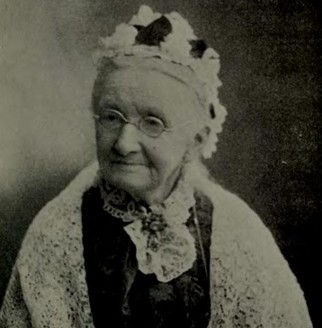
Caroline
Emily Clark (1825–1911), founder of the Boarding-out Society in Australia
From: C.H. Spence (1907) State Children in Australia
See details below under "Foster Care"
From: C.H. Spence (1907) State Children in Australia
See details below under "Foster Care"
HISTORY
Ancient Athens supported the orphans of people killed in military service. Plato wrote: "Orphans should be placed under the care of public guardians…" But the Roman world lacked orphanages, and most orphans faced death, slavery, or careers as beggars.
William Davis (1963), Professor of Ancient History, writes:
|
When
a child is born into a Roman home the father has complete legal rights
even as in Athens to determine whether it is to live or to die... If
his decision is adverse, mother and nurse may beseech in vain; the babe
is simply "exposed" that is, carried by a slave to some spot by the
highway and left to perish. This harsh old law is unrepealed. Possibly
such deserted children will be taken up by those whose homes are
desolate and who require consolation. There is a greater and fouler
chance that such babes will be carried away and reared by human harpies
who raise boys and children to convert them into grotesque buffoons or
pathetic beggars to wheedle the coppers from the tender-hearted...
|
Harris (1994) says: "Exposure was well integrated into the Roman economy, for it contributed on a substantial scale to the supply of slaves ... the exposed were a common source of slave prostitutes."
Third-century Christians organized watches at exposure walls and placed rescued babies with Christian families. Exposure of babies was finally made illegal by Emperor Valentinian in 374 CE.
THE BIBLE
The New Bible Dictionary (1982) concisely summarizes biblical concern for orphans:
|
The
care of the fatherless was from earliest times a concern of the
Israelites, as of the surrounding nations. The Covenant Code (Ex.
22:22), and the Deuteronomic Code particularly, were most solicitous
for the welfare of such (Dt. 16:11, 14; 24:17), protecting their rights
of inheritance and enabling them to share in the great annual feasts
and to have a portion of the tithe crops (Dt. 26:12). It is
specifically stated, moreover, that God works on their behalf (Dt.
10:18), and that condemnation awaits those who oppress them (Dt. 27:19;
cf. Mal. 3.5)
|
Ancient Israelites, during periods of apostasy and idol-worship, ignored their Scriptures and targeted orphans and widows for exploitation:
|
Father
and mother are treated with contempt in you [Jerusalem]; the alien
residing within you suffers extortion; the orphan and the widow are
wronged in you. (Ezekiel 22:6-7)
Ah,
you who make iniquitous decrees, who write oppressive statutes, to turn
aside the needy from justice and to rob the poor of my people of their
right, that widows may be your spoil, and that you may make the orphans
your prey!
What will you do on the day of punishment...? (Isaiah 10:1-3) |
CHRISTIANITY
From day one Christianity considered the poor and vulnerable. Acts 6:1 mentions a "daily distribution of food" to widows. This would have included their fatherless children.
Fitzgerald (2016) discusses the third century Christian book Didascalia Apostolorum which deals with Christian ethics and duties:
|
The
bishop is instructed to take pains over the upbringing of orphans,
thereby assuring that they lack nothing. In regard to orphaned girls,
he should assume the role of a father and give her in marriage to a
Christian. If the orphan is a boy, he is to ensure that he learns a
useful trade and is able to earn a living so that he is no longer
dependent on the Church's benevolence (17.4.2). But perhaps its most
striking ordinance reads as follows:
If
anyone of the children of Christians be an orphan, whether boy or girl,
it is well that, if there be one of the brethren who has no children,
he should adopt the child in the place of children. And whoever has a
son, let him adopt a girl; and when her time is come, let him give her
to him to wife, that his work may be completed in the ministry of God...
|
The Catholic Encyclopedia says:
| When Christianity began to affect Roman life, the best fruit of the new order was charity, and special solicitude was manifested towards the orphan. Antoninus Pius had established relief agencies for children. The Christians founded hospitals, and children’s asylums were established in the East. St. Ephraem, St. Basil, and St. John Chrysostom built a great number of hospitals... Justinian released from other civic duties those who undertook the care of orphans. In the Apostolic Constitutions, "Orphans as well as widows are always commended to Christian love. The bishop is to have them brought up at the expense of the Church and to take care that the girls be given, when of marriageable age, to Christian husbands, and that the boys should learn some art or handicraft and then be provided with tools and placed in a condition to earn their own living, so that they may be no longer than necessary a burden to the Church" (Apost. Const., IV, ii, tr. Uhlhorn, p. 185). St. Augustine says: “The bishop protects the orphans that they may not be oppressed by strangers after the death of the parents.” |
Fitzgerald (2016) writes:
Constantine
allocated food supplies to churches for the support of orphan children
(Eusebius, Vit. Const.4.28.1). The first known orphanage, the Orphanage
of Constantinople during the reign of Constantine's son, Constantius II
became a centre of educational and philanthropic activities...
In the 7th century, according to tradition, a teenage girl in Belgium who later became "Saint Dymphna" advocated protection for the mentally ill by placement in private homes. Her stance inspired the founding of an orphanage in Gheel still functioning.
During the Middle Ages foundling homes and monasteries cared for abandoned children. The external wall often had an opening into which infants could be deposited. When old enough, the kids became apprentices.
In England the Elizabethan Poor Law (1601) made individual parishes responsible to care for the poor.
In the 18th & early 19th centuries child abandonment in Britain remained rampant and orphanages were few and overcrowded. Many orphans were put in prisons or the poorhouse or fended for themselves. However, philanthropists increasingly established institutions for orphans.
In 1741 Thomas Coram (1668-1751) founded the London Foundling Home for the, "education and maintenance of exposed and deserted young children." At age 14 boys were apprenticed into various occupations, girls at 16 as servants.
There followed:
• Bristol Asylum for Poor Orphan Girls (1795);
• St Elizabeth's Orphanage of Mercy (1800);
• Infant Orphan Asylum (1827) and Asylum for Orphans (1846) established by
Congregational minister Andrew Reed (1787-1862);
• Female Orphan Asylum (1822) by Francois de Rosaz (1799-1876) in Brighton;
• Ashley Down Orphanage (1836) by George Müller;
• An orphanage established in 1867 by Baptist minister Charles Spurgeon (1834-1892).
• St Elizabeth's Orphanage of Mercy (1800);
• Infant Orphan Asylum (1827) and Asylum for Orphans (1846) established by
Congregational minister Andrew Reed (1787-1862);
• Female Orphan Asylum (1822) by Francois de Rosaz (1799-1876) in Brighton;
• Ashley Down Orphanage (1836) by George Müller;
• An orphanage established in 1867 by Baptist minister Charles Spurgeon (1834-1892).
The Encyclopedia Britannica under CHRISTIANITY suggests that Christian care for orphans contributed to the development of modern welfare:
|
The
church had founded orphanages during the 4th century, and the
monasteries took over this task during the Middle Ages. They also
fought against the practice of abandoning unwanted children and
established foundling hospitals. In this area, as in others, a
secularization of church institutions took place in connection with the
spreading autonomy of the cities. In Protestant churches the
establishment of orphanages was furthered systematically. In Holland
almost every congregation had its own orphanage, which was sustained
through the gifts of the members.
Following
the wars of religion of the 17th century, the orphanages were
reorganized pedagogically, notably by August Hermann Francke, who
connected the orphanage in Glaucha, Germany, which he had founded, with
a modern system of secondary schools. Francke's orphanage became a
model that was frequently imitated in England and also in North
America. Another innovator was the Alsatian Lutheran pastor Johann
Friedrich Oberlin (1740–1826), an exemplary proponent of comprehensive
Christian caring and curing for the whole person and community.
Responsible for a remote and barren area in the Vosges Mountains,
Oberlin transformed the impoverished villages into prosperous
communities. He led in establishing schools, roads, bridges, banks,
stores, agricultural societies (with the introduction of potato
cultivation), and industries. His nursery schools were imitated in many
areas through "Oberlin Societies." These efforts provided a significant
contribution to the development of modern welfare, which in the 20th
century was mainly the responsibility of state, communal, or
humanitarian organizations but was still characterized strongly by its
Christian roots.
|
EDUCATION and ORPHANAGES
The concept of "Ragged Schools" began with John Pounds (1766-1839) who invited homeless children into his shoe-repair workshop and taught them reading, writing, arithmetic and skills such as carpentry and shoe repair. The idea went nation-wide with Thomas Guthrie (1803-1873), philanthropist and Free-Church-of-Scotland minister, whose "ragged schools" supplied meals and education for disadvantaged children with the policy to win them over by "the power of Christian kindness".
In 1834 the workhouse system was instituted where orphans and other vulnerable people lived in exchange for work. But conditions were often so abusive as to cause public outcry and increase the support for orphanages.
In Germany A.H. Francke (1663-1727), professor of theology and philanthropist, instituted charity-supported "Francke Foundations" where orphans and other children were clothed, fed and educated. He added an orphan asylum, a Latin school, a German school, a seminary, and courses teaching natural science and manual trades. Francke Foundations became a prototype for German education after the King of Prussia visited in 1713 and initiated legislation for similar educational centers.
Vincent de Paul (1576-1660), French priest and philanthropist, founded the "Sisters of Charity". These spread over the world and were looked to for the protection of orphans. France alone, around1800 CE, had 426 houses of benevolence managed by the "Sisters".
In the USA the first private orphanage (the Orphan Asylum) was co-founded in 1806 in New York City by Elizabeth Schuyler Hamilton (1757-1854) of the Dutch Reformed Church.
Religious people continued to establish orphanages, a few of whom were:
•
Ratisbonne, M.A. (1814-1884) Jewish "infidel" of Strasbourge who became
an ordained priest. Assisted by his brother he founded the Sisterhood
of Our Lady of Sion which transferred to Jerusalem in 1855 where
Ratisbonne built two convents which included orphanages for girls, plus
an orphanage for boys which included a school.
• Maria Francesca Cabrini (1850-1917) Italian-born founder of the "Missionary Sisters of the Sacred Heart" who "founded several schools, hospitals, and orphanages."
• Amanda Berry Smith (1837-1915) A former slave who became a missionary in West Africa. Returning to America she founded the Amanda Smith Orphanage and Industrial Home (1899) for abandoned African-American girls.
• Rose Philippine Duchesne (1769-1852) French-born Catholic missionary who founded orphanages in the USA.
• George Ferdinand Müller (1805-1898), a founding member of the Plymouth Brethren movement, cared for 10,000 orphans in England. He established five orphanages and 117 schools which offered Christian education to 120,000 children. (Wikipedia) Müller received no government support and never solicited, but accepted unsolicited food, money and labour.
• Maria Francesca Cabrini (1850-1917) Italian-born founder of the "Missionary Sisters of the Sacred Heart" who "founded several schools, hospitals, and orphanages."
• Amanda Berry Smith (1837-1915) A former slave who became a missionary in West Africa. Returning to America she founded the Amanda Smith Orphanage and Industrial Home (1899) for abandoned African-American girls.
• Rose Philippine Duchesne (1769-1852) French-born Catholic missionary who founded orphanages in the USA.
• George Ferdinand Müller (1805-1898), a founding member of the Plymouth Brethren movement, cared for 10,000 orphans in England. He established five orphanages and 117 schools which offered Christian education to 120,000 children. (Wikipedia) Müller received no government support and never solicited, but accepted unsolicited food, money and labour.
ORPHANAGES AROUND THE WORLD
As Christianity spread worldwide, schools, hospitals and orphanages followed. Some recent statistics are:
Ghana:
148 orphanages;
Nigeria: 17 million orphans; number of orphanages unknown;
Rwanda: 400,000 orphans, only 5000 in orphanages;
Tanzania: 52 orphanages;
Zimbabwe: 47 orphanages;
Nepal: 602 child care homes;
Afghanistan: 19 orphanages in Kabul;
India: "Thousands" of orphanages;
Cambodia: Number of orphanages unknown but one group, "World Orphans", constructed 47 orphanages in a three-year period;
Laos: Three orphanages;
Egypt: 185;
Russia: 1344 in 2011;
Guatemala: Four government orphanages and 100 run by Christian organizations and missionaries;
Haiti: Total number unknown but Catholic Relief Services assist 120 orphanages. (Wikipedia)
Nigeria: 17 million orphans; number of orphanages unknown;
Rwanda: 400,000 orphans, only 5000 in orphanages;
Tanzania: 52 orphanages;
Zimbabwe: 47 orphanages;
Nepal: 602 child care homes;
Afghanistan: 19 orphanages in Kabul;
India: "Thousands" of orphanages;
Cambodia: Number of orphanages unknown but one group, "World Orphans", constructed 47 orphanages in a three-year period;
Laos: Three orphanages;
Egypt: 185;
Russia: 1344 in 2011;
Guatemala: Four government orphanages and 100 run by Christian organizations and missionaries;
Haiti: Total number unknown but Catholic Relief Services assist 120 orphanages. (Wikipedia)
Many Christian organizations still manage or sponsor orphanages or otherwise assist orphans. Some of these are:
• Christian Alliance for Orphans (1954)
• Focus on the Family (1977)
• Hope for Orphans (2001)
• Spurgeons Children's Charity (1867)
• Tim Tebow Foundation (2010)
• World Orphans (1993)
• Focus on the Family (1977)
• Hope for Orphans (2001)
• Spurgeons Children's Charity (1867)
• Tim Tebow Foundation (2010)
• World Orphans (1993)
In Pakistan, "Barnabas Fund is ... supporting a locally-run church project providing crucial help to 300 destitute widows... The widows receive monthly food parcels from Barnabas Fund, costing just $36."
FOSTER CARE
After
the mid 19th century the alternative of foster care was popularized by
American philanthropist, abolitionist and Protestant minister Charles
Loring Brace (1826-1890), regarded as "father of the modern foster care
system".
The influential philanthropist Thomas Barnardo (1845 - 1905), a Christian Protestant from Ireland, opened 112 "Dr Barnardo's Homes" for the destitute and homeless in England. Personnel actively searched for "waifs and strays, to feed, clothe and educate them." Infants were "boarded out"; older girls sent to the industrial training homes; and boys aged 13-17 trained in the various trades.
Caroline Emily Clark (1825–1911), Unitarian social reformer in Adelaide, introduced the "boarding-out system" in Australia to accommodate orphans and abandoned children with foster families. She believed "boarding out" is less expensive than State-run institutions and resulted in better-educated, more-productive adults.
The influential philanthropist Thomas Barnardo (1845 - 1905), a Christian Protestant from Ireland, opened 112 "Dr Barnardo's Homes" for the destitute and homeless in England. Personnel actively searched for "waifs and strays, to feed, clothe and educate them." Infants were "boarded out"; older girls sent to the industrial training homes; and boys aged 13-17 trained in the various trades.
Caroline Emily Clark (1825–1911), Unitarian social reformer in Adelaide, introduced the "boarding-out system" in Australia to accommodate orphans and abandoned children with foster families. She believed "boarding out" is less expensive than State-run institutions and resulted in better-educated, more-productive adults.
She founded the "Boarding-out Society" about which another Australian social reformer, Catherine Spence (1907 & 1910), wrote:
| In other English speaking countries boarding-out in families is sometimes permitted, but here, under the Southern Cross, it is the law of the land that children shall not be brought up in institutions but in homes... This move- ment originated in South Australia, and with all its far-reaching develop- ments and expansion it is due to the initiative of one woman, of whom the State and the Commonwealth are justly proud – Miss C. E. Clark. |
The boarding-out idea probably came from early Christianity. The Catholic Encyclopedia says:
|
Placing-out
was the practice in early Christian days. The widows and deaconesses of
the early church took orphans into their homes as Fabiola did in
Rome... It was the general practice at the time of the first
persecutions. Uhlhorn (Christian Charity in the Ancient Church, p. 185)
says: "It would also often happen that individual members of the Church
would receive orphans, especially those whose parents had perished in a
persecution." Thus was Origen adopted, after Leonidas, his father, had
suffered martyrdom, by a pious woman in Alexandria (Eusebius, "Hist.
Eccl.", VI, ii). Again the child of the female martyr, Felicitas, found
a mother; and Eusebius tells us of Severus, a Palestinian composer, who
especially interested himself in the orphans and widows of those who
had fallen...
|
Today,
in wealthier countries which have the infrastructure and trained
personnel such as Western Europe, North America and Australia, most
orphanages have closed, replaced with government-arranged foster care.
20th
century psychological studies have supported the importance of
stability and family environment for children. In orphanages,
especially large ones babies may receive little physical contact or
affection. Abandoned children in socially and emotionally deprived
environments lag behind children with parents or foster parents in
physical growth, IQ and social development. In the worst cases,
orphanages are dangerous, unregulated places of child abuse and child
neglect.
In December 2019 the UN recognized that institutions harm children and called for their progressive elimination.
CONCLUDING COMMENTS
The Bible often mentions orphans and widows in the same sentence, sometimes also the "alien" [resident foreigners], the "needy", the "oppressed" and the poor. (Psalm 10:18; 146:8) The implication is that God cares about all sorts of vulnerable people, and Christians in the "image of God" should also.
Orphans throughout history suffered greater neglect than other citizens. When for example the Communist regime in Rumania economically ruined Rumania, orphans were not spared. The world learned of 170,000 orphans in state orphanages — emaciated, isolated, emotionally deprived, stunted in growth, and sick.
On the treatment of orphans the world for thousands of years was negligent, exploitative and wrong. But the Bible, consistent with its identification as the "Word of God", inspired change. Its followers were instrumental in the introduction of better ethics, and in practical help including education for orphans worldwide.
REFERENCES:
Barnabas Fund, New hope for destitute Christian widows in Pakistan, Eternity, Issue 100, March 2019, p. 4
Christianity 2009 Encyclopædia Britannica 2009 Deluxe Edition. Chicago: Encyclopædia Britannica
Davis, W.S. 1963 (Fourth printing) A Day in Old Rome A Picture of Roman Life, Biblos Tannen, p. 184
Douglas, J.D. (Organizing Editor) 1982 New Bible Dictionary, Inter-Varsity Press, p. 863
Garton, N. 1992 George Müller and his Orphans, Chivers Press
Fitzgerald, J.T. Orphans in Mediterranean antiquity and Early Christianity, Acta theol. vol.36 suppl. 23, 2016
http://www.scielo.org.za/scielo.php%20?%20script=sci_arttext&pid=S1015-
87582016000200003.htm
Harris, W.V. Child Exposure in the Roman Empire, The Journal of Roman Studies, Volume 84, 1994, pp 1-22
King, P.L. 2004 Moving Mountains, Chosen Books, pp 15-34
Raftery, M. & O'Sullivan, E. 2001 Suffer The Little Children: The Inside Story of Ireland's Industrial Schools
Spence, C.H. 1907 State Children in Australia, Vardon & Sons
Spence, C.H. 1910 An Autobiography
http://www.gutenberg.org/ebooks/4220
http://www.earlychristianwritings.com/text/didascalia.html
https://adoption.org/many-orphans-worldwide.htm
https://en.wikipedia.org/wiki/August_Hermann_Francke.htm
https://en.wikipedia.org/wiki/Caroline_Emily_Clark.htm
https://en.wikipedia.org/wiki/Charles_Loring_Brace
https://en.wikipedia.org/wiki/Didascalia_Apostolorum
https://en.wikipedia.org/wiki/Dymphna
https://en.wikipedia.org/wiki/George_Muller.htm
https://en.wikipedia.org/wiki/infanticide
https://en.wikipedia.org/wiki/John_Pounds
https://en.wikipedia.org/wiki/Orphanage.htm
https://en.wikipedia.org/wiki/Thomas_Caram
https://en.wikipedia.org/wiki/Thomas_Guthrie
https://en.wikipedia.org/wiki/Thomas_John_Barnardo
https://en.wikipedia.org/wiki/World_Orphans
https://showhope.org/2014/04/16/4-great-ministries-caring-orphans/
https://www.catholic.com/encyclopedia/maria-alphonse-ratisbonne.htm
https://www.catholic.com/encyclopedia/Orphans-and-Orphanages.htm
https://www.hopeandhomes.org/blog-article/unrc-2019/
https://www.missionarytim.com/why-the-world-still-needs-christian-orphanages/.htm
https://www.worldorphans.org/blog/blog/2014/06/expose-it-historys-fatal-wounds-for-
unwanted-children.htm
"Anonymous" has for decades, on this webstie, defended the Bible
as being accurate in science, and superior in ethics:
as being accurate in science, and superior in ethics: